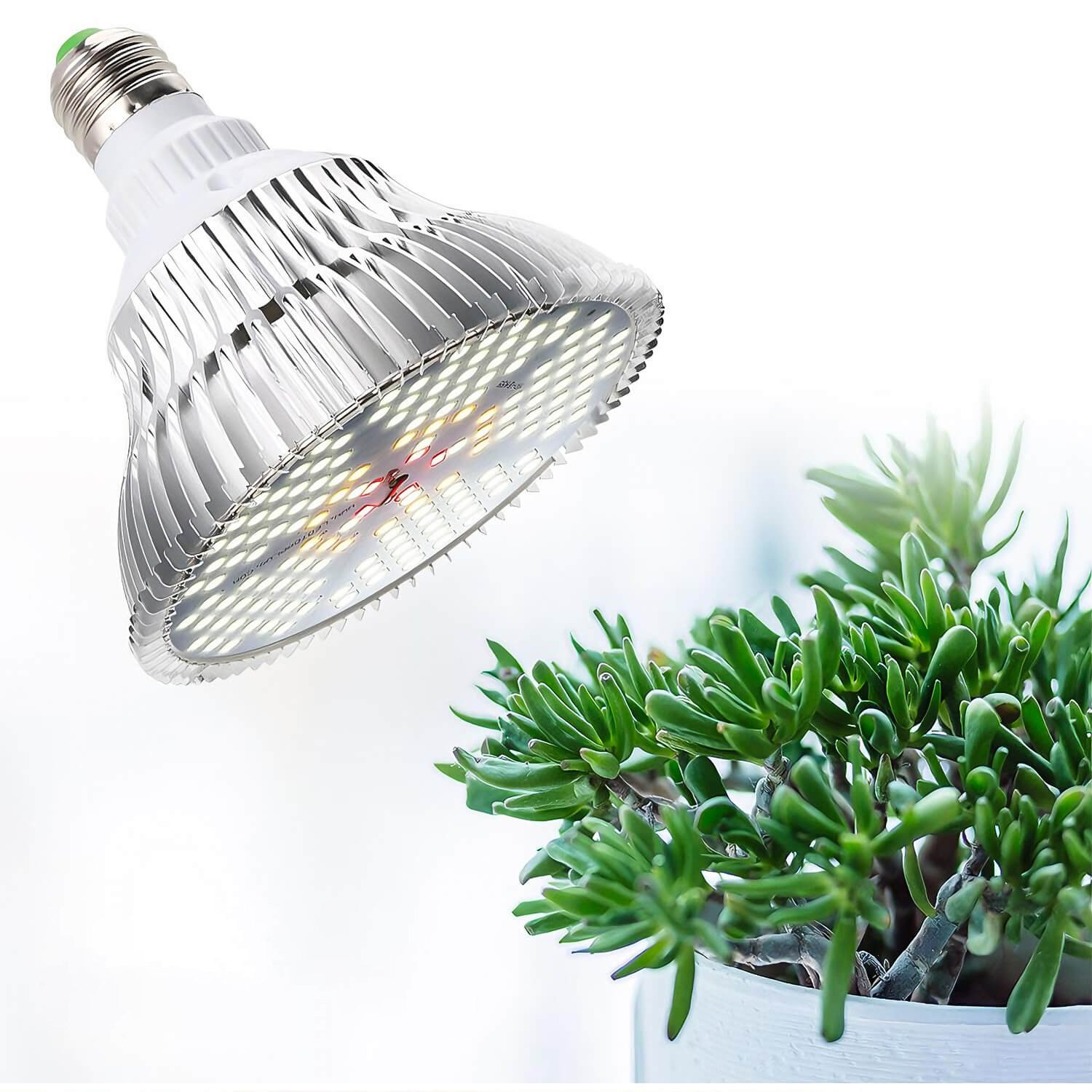
Selecting a plant grow light is more than trusting marketing claims like full spectrum. The real value comes from verified specifications and quality hardware. This guide helps you choose a light that truly supports healthy plant growth.
Plants mainly use blue light (400-500nm) for compact, vegetative growth and red light (600-700nm) to promote flowering and fruiting. Some advanced lights include far-red light to influence plant structure and timing. Green light improves canopy penetration and visual comfort.
A good grow light provides a spectral graph and ideally offers adjustable settings for different growth stages.
The key measure of usable light is Photosynthetic Photon Flux Density (PPFD), expressed in μmol per square meter per second. Uniform coverage ensures even growth and prevents weak spots.
Typical PPFD ranges for common plants:
• Seedlings: 100 to 200 μmol/m²/s
• Leafy Greens: 200 to 400 μmol/m²/s
• Flowering Plants: 400 to 800 μmol/m²/s
Request a PPFD distribution map from the manufacturer to confirm light uniformity across your grow area.
Photon Efficiency
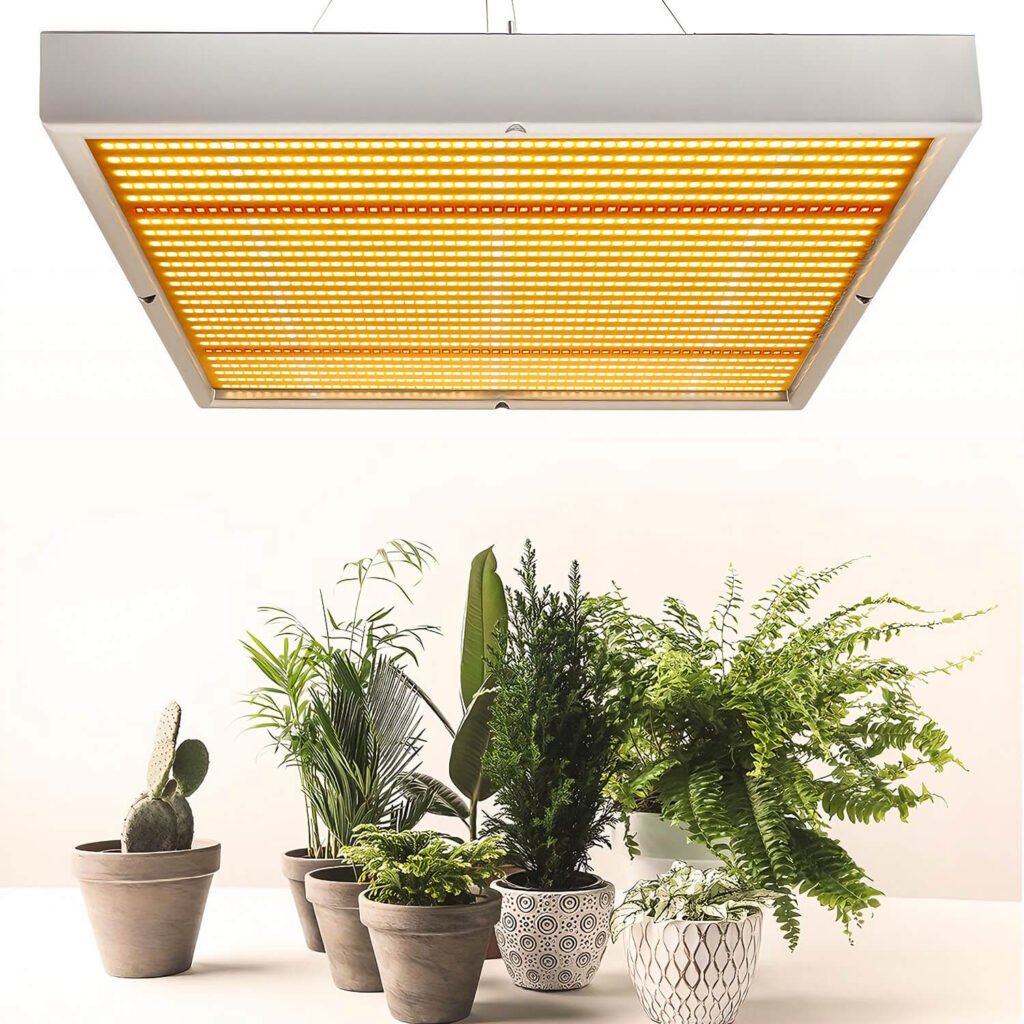
Photon efficacy (μmol per joule) measures how much usable light a fixture produces per watt of electricity. Higher efficacy reduces energy costs. A value above 2.5 μmol/J indicates a high-quality, cost-effective design.
Heat Management
Effective heat dissipation is critical. Look for fixtures with substantial aluminum heat sinks. Poor cooling accelerates LED degradation and shortens lifespan.
Core Components
The performance and reliability of a grow light depend on three main parts:
• LED Chips: High-quality diodes ensure consistent output, proper spectrum, and long life. Brands like Samsung and Osram are reliable.
• Driver: Controls current, ensures stability, and protects LEDs from power fluctuations. Reputable drivers like Mean Well or Inventronics enhance safety and lifespan.
• Optics: Lenses or reflectors deliver light evenly across the plant canopy, minimizing loss and improving growth uniformity.
Branded components are a strong indicator of quality.
• Choose a fixture with an appropriate IP rating for humidity and moisture.
• Look for flexible mounting options and features such as dimming.
• Select manufacturers that provide safety certifications and a reliable warranty.
Following this checklist ensures you choose a grow light that is efficient, durable, and perfectly suited for your indoor plants.